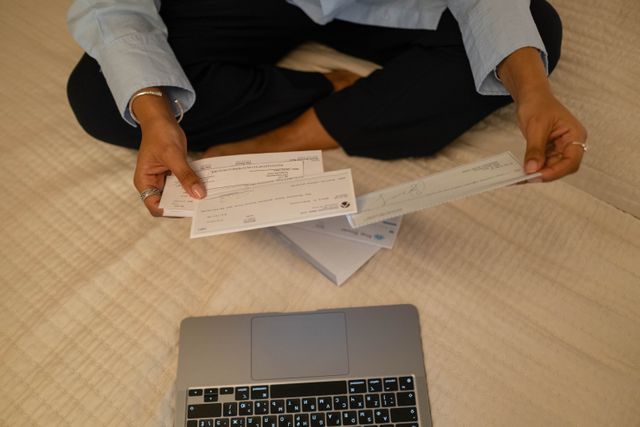
It goes like: Your paycheck comes in, and for a moment, you feel like you can finally breathe. Then the bills are due, groceries need stocking, transport costs add up, and a few everyday purchases here and there take their share. Suddenly, payday is still days away, but your money is already gone. And when an unexpected expense comes up, you may have no choice but to turn to a credit card or loan.
A recent Quarterly Money Survey by CNBC and SurveyMonkey indicates that 63% of Americans are living paycheck to paycheck. In comparison, more than half (53%) are overwhelmed by their finances now compared to a year ago. So when it comes to feeling broke right after the paycheck arrives, you’re not the only one.
Now, a digital budgeting app won’t magically increase your income, but it can help you see exactly where your money goes, spot your spending patterns, and, more intentionally, help you plan for upcoming expenses before your paycheck disappears. Such visibility can be an important first step toward breaking the paycheck-to-paycheck cycle.
Read on to find out exactly how the right budgeting app can turn budgeting from something you do after spending into a system that helps you plan your money before it disappears.
What does living paycheck to paycheck actually mean?
If you lost your income today, would you still be able to pay for your living expenses? If not, chances are you’re living paycheck to paycheck.

Simply put, living paycheck to paycheck implies the inability to meet your financial obligations if you were unemployed—alternatively, the constant need for your next paycheck to pay for upcoming expenses.
It isn’t necessarily synonymous with having a low income, though. In fact, according to PYMNTS Intelligence, 17.6% of higher-income earners ($150,000 or more) are living paycheck to paycheck with little to no financial buffer.
Why is it so difficult to break the paycheck-to-check cycle?
You might often ignore some signs when you’re living paycheck to paycheck, like:
1. You don’t know exactly where your money is going
It’s hard to change a spending habit you can’t see. It’s even harder to notice how small purchases, bills, and automatic payments happening throughout the month can wipe out your paycheck faster than expected, if you’re not tracking them.
2. Your bills and paydays don’t always line up
Getting paid doesn’t invariably imply having money available when you need it. If several bills fall before your next paycheck, you can find yourself constantly playing catch-up even when your monthly income should technically cover your expenses.
3. Small expenses accumulate
A coffee here, takeout there, a subscription, or a quick online purchase may seem harmless on its own. Collectively, though, those small costs can eat into the money you could have saved or used for upcoming bills.
4. Unexpected expenses reset your progress
You may finally start putting money aside. Then here comes an unexpected medical bill, car repair, or urgent home expense that forces you to dip into savings or borrow money. Consequently, the unexpected expense can cut your progress and send you right back to where you started.
5. Debt payments reduce your available income
For every part of the paycheck committed to debt payments, there’s less money available for current needs. Therefore, if your remaining income is insufficient to cover everything, you may rely on more credit or borrowing, which creates a cycle that’s difficult to escape.
How can a digital budgeting app help you break the cycle?
A budgeting app provides convenience for income tracking, expenditure monitoring, and budget planning, which can easily be accessed through mobile devices. Hence, it could come in handy as an important step in breaking the paycheck-to-paycheck cycle.
1. Track your spending automatically
You may want to remember every monthly expense—to know where your money goes—you don’t have to. Numerous budgeting apps have automatic transaction categorization for income and expenses, such as paychecks, rent, groceries, transport, etc. Along with spending dashboards that you can use for expense tracking, identifying spending patterns, and keeping up with your actual cash flow in real time.
2. Create a realistic budget based on your actual income
A good budget only works better when it reflects your real life. An app can show you how much comes in and how much goes out. With that data, you can set spending limits that you can actually stick to, allocate money to categories, and distinguish needs from wants efficiently. Remember to always plan around your actual take-home pay.
3. Plan your money around your paydays and bills
To avoid running short, you need to know when money comes in and when bills are due. A budgeting app can provide an overview of upcoming bills. This makes it easier to safely spend on essentials (rent, utilities, and groceries), whatever is left on discretionary spending (entertainment, dining out, vacations, etc.), and/or savings.
4. Set spending alerts before you overspend
You could easily lose track of spending when you’re paying for things throughout the month. With the help of a digital budgeting app, you can set spending notifications for category limits, bill reminders, and low-balance alerts to intervene before your income runs out.
5. Automate savings, even when you can’t save much
You don’t need to save a large amount to get started. Ultimately, it’s the habit that counts, no matter how small the amount is from each paycheck. Automatic transfers on payday help you save before the money gets spent elsewhere.
6. Identify recurring expenses and subscriptions
Subscriptions and other recurring charges can be forgotten, and sometimes, it’s hard to spot the unnecessary services that escalate the bill over time. Using a personal budgeting app, you can cancel the ones you no longer need and free up some cash.
7. Help you build an emergency fund
Ultimately, you won’t have to worry about unexpected expenses because expense tracking, along with efficient budgeting, could provide the surplus needed for savings into an emergency fund. Even small contributions can gradually create a financial buffer to reduce your reliance on debt, especially on a “rainy day.”
What features should you look for in a budgeting app?
There are a number of free budgeting apps available for beginners. Keep in mind, not all budgeting apps work the same way, and the right one should ease money management, not complicate it further. As you compare your options, seek features that give you a clear picture of your spending, help you plan ahead, and keep you on track.
| Feature | Why it matters |
| Automatic expense tracking | Reduces manual work |
| Bank/account syncing | Gives a clearer financial picture |
| Spending alerts | Helps prevent overspending |
| Bill reminders | Reduces missed payments |
| Savings automation | Makes savings consistent |
| Cash-flow forecasting | Shows whether you’ll make it to payday |
| Goal tracking | Makes progress visible |
| Debt tracking | Helps prioritize repayments |
| Security features | Protects financial information |
Can budgeting apps really help you save money? Yes, but the app itself can neither save money for you nor become a solution to insufficient income.
When utilized, a digital budgeting app can give you the visibility, structure, and automation needed to create financial breathing room to help you break the paycheck-to-paycheck cycle. All you have to do is use it to track your expenses, plan your budget, automate savings, and eventually build a buffer to take control of your personal finances.
Leave a Reply